
____________________________________________________________________________________________________________________________
Landscape photography is a genre that captures the raw beauty of nature, offering a powerful connection between the photographer, the viewer, and the natural world. Whether it’s the serenity of a mountain range, the dynamic motion of ocean waves, or the stillness of a forest at sunrise, the right photograph can evoke deep emotions and an appreciation for the environment. However, producing truly stunning landscape photography requires more than just pointing your camera at a beautiful scene. It’s about understanding light, composition, weather, and technique. Here are some essential tips to help you capture nature’s beauty in all its glory.
1. Understand the Light
Lighting is one of the most critical factors in landscape photography. The quality, direction, and intensity of light can drastically change the mood and impact of a photograph. While many photographers gravitate towards “golden hour” light—just after sunrise and just before sunset—there are no hard rules about when to shoot. Each type of lighting has its own unique advantages.
- Golden Hour: The warm, soft light during the golden hour provides long shadows and enhances textures in landscapes, making it ideal for highlighting natural features like mountain ridges or trees.
- Blue Hour: This period, occurring just before sunrise and after sunset, offers cooler tones and softer light, creating a calm and often mystical atmosphere.
- Midday: Although many photographers avoid midday light due to its harshness, it can still be used creatively. Direct sunlight can bring out vibrant colors and strong contrasts, especially in dramatic locations like deserts or coastal cliffs.
The key is to experiment with different lighting conditions and learn how they interact with your scene. The sunroom could also be a great venue for photography.
2. Master Composition
Composition is how the elements within your frame are arranged, and strong composition is vital for creating compelling images. Even in a breathtaking landscape, poor composition can make the scene feel flat or unbalanced. Here are some foundational principles:
- Rule of Thirds: Imagine dividing your frame into nine equal parts using two horizontal and two vertical lines. Placing key elements (like a horizon, mountain peak, or tree) along these lines or their intersections generally creates a more balanced and engaging photo.
- Leading Lines: Roads, rivers, fences, or any natural or man-made lines that lead the viewer’s eye into the frame can add depth and guide the viewer through the image.
- Foreground Interest: Including elements in the foreground, like rocks, flowers, or water, adds dimension and helps create a sense of scale, which is essential for capturing expansive landscapes.
- Framing: Using natural elements such as trees, cliffs, or even clouds to “frame” the subject helps direct the viewer’s attention to the most important part of the scene while adding layers and interest to the composition.
- Balance and Symmetry: Symmetry, whether natural (reflections in water) or man-made (a road bisecting the frame), can be striking. A well-balanced shot with thoughtful symmetry often feels harmonious and satisfying to the viewer.
3. Plan Ahead and Scout Locations
Researching and scouting potential shooting locations before you arrive can make a huge difference in your final image. Thanks to tools like Google Earth, Instagram, and photography apps like PhotoPills, you can get a sense of how a location might look during different times of day or even different seasons. Planning ahead helps you anticipate lighting conditions, the sun’s position, and even weather patterns that may enhance your shot.
If you’re unfamiliar with a location, arriving early gives you time to walk around and find the best vantage points. Scouting also allows you to discover angles or compositions that you might not have considered at first glance.
4. Patience and Persistence Pay Off
Great landscape photography often requires patience. Nature is unpredictable, and the perfect conditions can take time to manifest. You might need to wait for the light to soften, for clouds to shift into a more pleasing formation, or for wind to calm down to capture a still reflection.
Sometimes, the first visit to a location won’t yield the image you had envisioned. Don’t be discouraged. Revisiting a location multiple times under different conditions can offer new perspectives and opportunities. Persistence is key in landscape photography. Often, it’s the photographers willing to wait out a storm or return to the same spot at different times of year who come away with the most memorable shots.
5. Use a Tripod for Stability and Precision
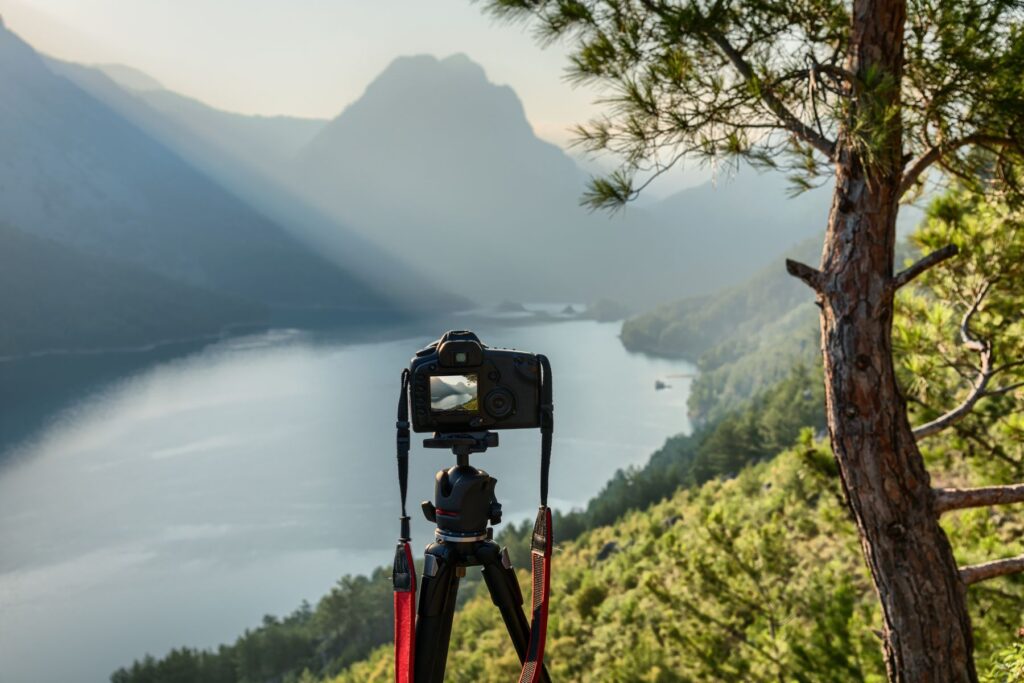
Sharpness is critical in landscape photography, especially when capturing large prints or fine details in your scene. Using a tripod allows you to keep your camera stable during longer exposures, which is particularly important in low light conditions, such as sunrise, sunset, or in shaded forests. Tripods also enable you to use smaller apertures (higher f-stop numbers) for greater depth of field, ensuring both your foreground and background are in sharp focus.
Moreover, a tripod slows down the shooting process, encouraging you to be more deliberate in your composition and camera settings, which often leads to better results.
6. Experiment with Exposure Settings
Understanding your camera’s exposure settings—aperture, shutter speed, and ISO—is essential for controlling how your landscape images turn out.
- Aperture (f-stop): For landscape photography, you’ll usually want a large depth of field, meaning both the foreground and background are in focus. Using a small aperture (high f-stop, such as f/8 to f/16) achieves this.
- Shutter Speed: If you’re capturing motion, like waterfalls or moving clouds, a longer shutter speed can create a dreamy, blurred effect. Conversely, a faster shutter speed will freeze the motion, resulting in a crisp, dynamic image.
- ISO: Keeping your ISO as low as possible (usually ISO 100 or 200) reduces noise and ensures a cleaner, sharper image. Only increase ISO if necessary due to low light conditions.
7. Watch the Weather
Weather plays a huge role in landscape photography, and often, it’s the unpredictable or dramatic weather conditions that result in the most stunning images. Overcast skies can offer soft, diffused light, while stormy clouds can add drama and intensity. Fog, mist, or rainbows can turn an ordinary scene into something magical.
Make a habit of checking weather forecasts and being flexible with your shooting schedule. If you’re able to embrace challenging weather conditions instead of avoiding them, you may find yourself capturing nature at its most dramatic and awe-inspiring.
8. Post-Processing: The Finishing Touch
While getting the shot right in-camera is crucial, post-processing is an important part of landscape photography. Subtle adjustments in software like Adobe Lightroom or Photoshop can bring out details in shadows and highlights, enhance colors, and correct exposure imbalances. However, avoid over-processing; the goal is to enhance the natural beauty of the landscape, not alter it to the point of looking artificial.
Conclusion
Stunning landscape photography is the result of thoughtful planning, an understanding of light and composition, patience, and technical skill. By mastering these elements, you’ll be better equipped to capture the awe-inspiring beauty of the natural world. As with any art form, practice is key, so get out into nature as often as possible and experiment with different techniques. The more you shoot, the more you’ll develop your own style and vision, and the more you’ll be able to share the wonder of nature through your lens.